
The content on this website is for informational purposes only and is not meant to replace professional or medical advice. See our full disclaimer.
(a.k.a. how to stop the time traveling vortex between "I have plenty of time" and "WHY AM I STILL IN MY TOWEL?!?")
If you live with ADHD (attention deficit hyperactivity disorder) or love someone who does, you know that being on time can feel impossible.
Let me paint you a picture:
I had a doctor's appointment at 10:00 AM. I knew it. I wanted to be on time. I was thinking about it all morning.
But at 9:45, I was still in my kitchen eating toast and googling "how long does sourdough starter live if you ignore it?".
Spoiler alert: I did not make it on time.
Sound familiar?
So what is it about ADHD lateness?
To our peers it can look like we "just need to try harder", but there are scientific reasons our ADHD brain struggles with time. Research shows that ADHD affects time perception, attention regulation, and the executive functions that help us plan, remember steps, and get started on time.1Time Perception is a Focal Symptom of Attention-Deficit/Hyperactivity Disorder in Adults
One way to help is by using Backward Planning, and we created a free printable that walks you through it so you can be on time with ADHD.

If you use it enough, it can turn into a habit, and you may find yourself doing backward planning in your head instead of on paper to arrive on time. You can grab it for free at the bottom of this post.
Jump to:
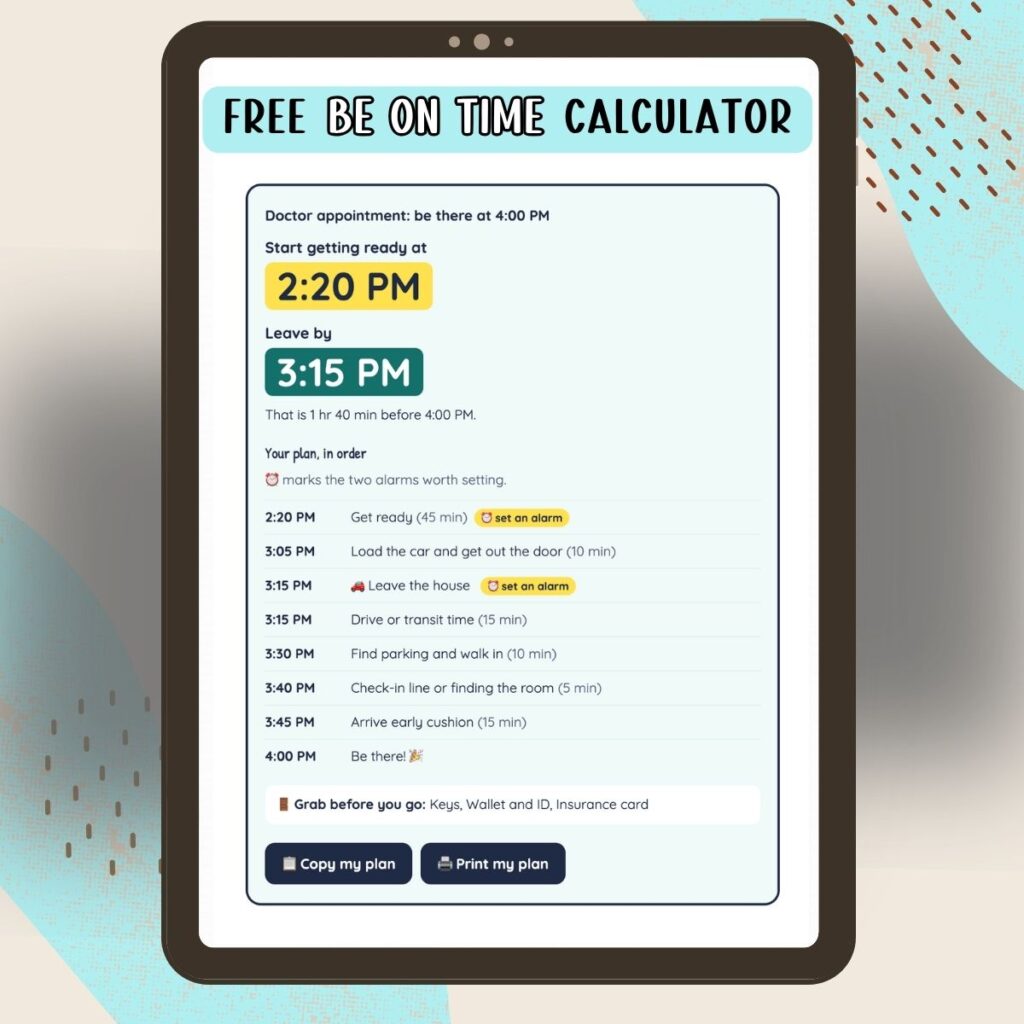
We Turned this Method into a Free Web Tool
new!
This Be On-Time Calculator does the backward planning for you.
Time Blindness plus Time Optimism (the double whammy)
For many of us with ADHD, the concept of time is not linear. It feels like "now" and "not now."2Dr. Russell Barkley on ADHD and Time Blindness (5/30/09) [Video] We struggle with time blindness, which makes it hard to estimate how long things actually take.
Our brain says "plenty of time" when reality says otherwise.
Time blindness messes with perception. Time optimism messes with prediction.
Time blindness = "I cannot feel time passing."
Time optimism = "I believe I can do it faster than history or reality says."

How to be on Time with Backward Planning
Backward planning, also called reverse scheduling or time mapping, is when you start with the time you need to arrive and work backward step by step to figure out when you actually need to start getting ready.3Trying to Get Ahead? Plan in Reverse, Study Suggests
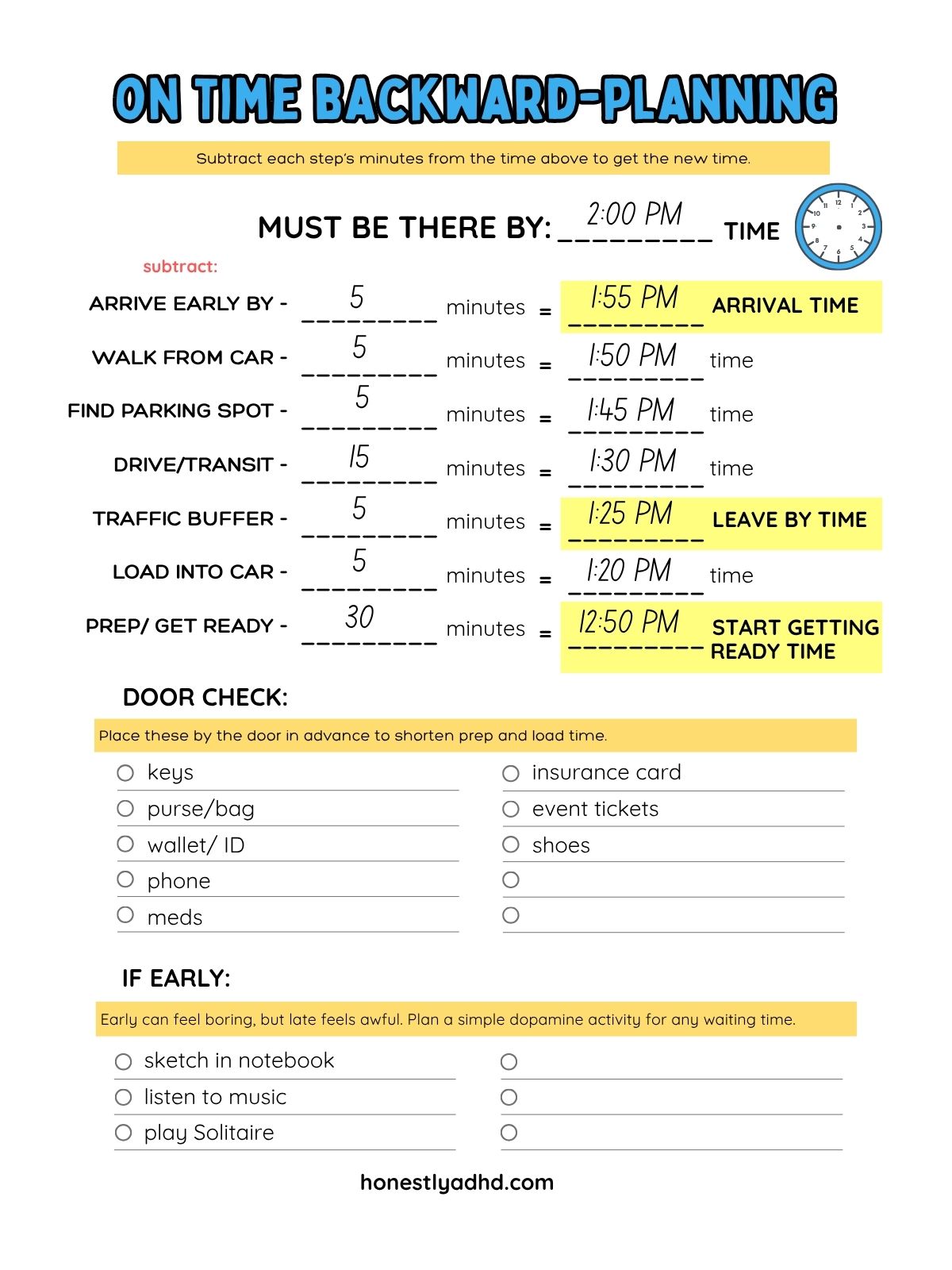
Many people with attention deficit hyperactivity disorder find this is one of the simplest adhd time management tips because it turns a vague plan into clear numbers and times.
It is a way to build a time map that includes everything your ADHD brain tends to skip or underestimate, like hunting for your wallet, putting on pants, or finding parking.
This supports executive functioning by making attention and planning more concrete.
Why it helps
We need backward planning because we forget the little things that steal our time, like:
- time to find a parking spot
- a line at the check-in desk
- how many steps it actually takes to get ready
- not setting things out ahead of time
- scrambling for keys, purse, phone, or whatever else went missing at the last minute
Backward planning pulls all of those forgotten steps into the plan
And because we know how hard this can be, we made you a printable worksheet to help you do it.
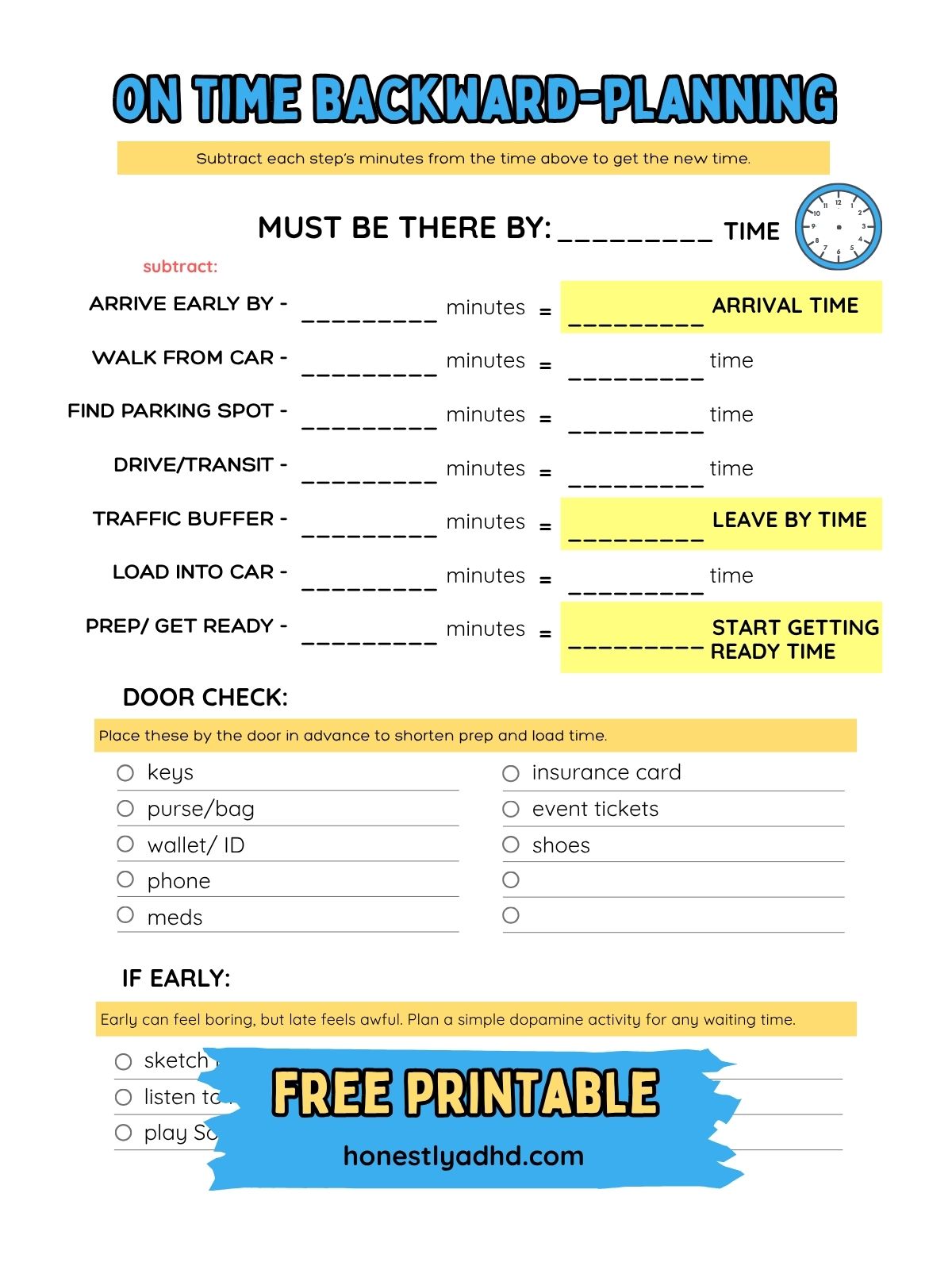
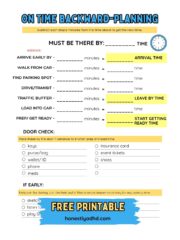
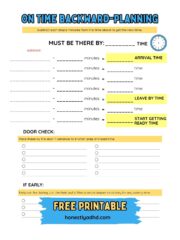
Free ADHD Backward Planning Worksheet
This free printable is an adhd-friendly time management tool that helps adults and children translate intention into action.
Use it for:
- Appointments
- School mornings
- Job interviews
- Parties
- Flights, soccer games, or anything that has a start time
We made two printable versions:
- One with the most common prompts you'll need (like drive time)
- A blank version so you can add the steps you tend to forget that often make you late.
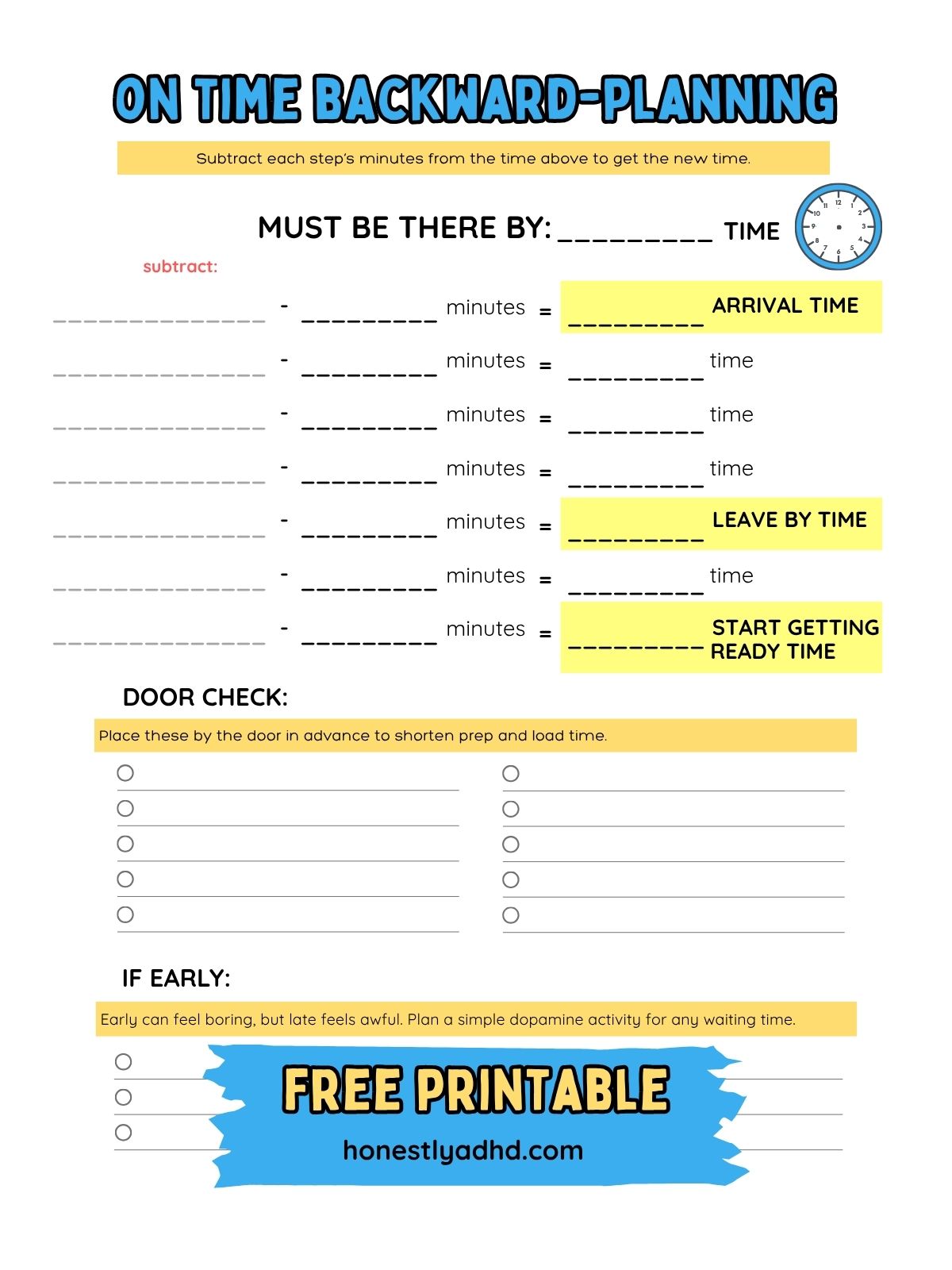
Laminate it for weekly routines or stick it on the fridge so your teen or partner can stop asking when to leave.
📝 How It Works (Real-Life Example)
Let's say you need to be at the check-in counter for a doctor's appointment by 10:00 AM.
Instead of just thinking, "It is a 30 minute drive, so I will leave at 9:30," ask the question:
"What has to happen between now and then?"
Let's break it down using backward planning:
- Check-in time: 10:00 AM
- Arrive 5 minutes early: 9:55 AM
- Walk from car to counter (5 min). Arrive in parking lot by: 9:50 AM
- Time to find a spot (5 min). Enter parking lot by: 9:45 AM
- Drive time (30 min + 5 min traffic buffer). Leave house by: 9:10 AM
- Loading the car (10 min). Start loading at: 9:00 AM
- Prep time (shower, clothes, bag, wallet, phone, meds, snack) (45 min). Begin getting ready at: 8:15 AM
So even though your brain might say "9:30 should be fine," the truth is that you need to start getting ready at 8:15.
Door Check
Locate and set these items aside in advance to shorten getting ready and loading time.
- Keys
- Wallet/ID
- Phone
- Bag/ Purse
- Shoes
- Meds
- Water/Snack
- Event Tickets
- Insurance Card
- Important Papers
Why we are Scared of Being Early
You may not even realize this, but sometimes the reason we are late is that we want to avoid being early.
We dread the unknown or boredom if we arrive somewhere with 15 minutes to spare.
Why is that?
Research shows that with ADHD, being under-stimulated can feel uncomfortable because dopamine signaling is low, and waiting without reward feels like a small punishment.4Are ADHD Symptoms Associated with Delay Aversion or Choice Impulsivity? A General Population Study
To fix this, make being early rewarding on purpose.
Here are some early-arrival waiting ideas that work for adult ADHD and teens as a simple dopamine boost:
- listen to music
- play a quick game of Solitaire on your phone
- bring a cute notebook and markers to sketch
- practice a calming mindfulness activity, like a two minute breathing video.
Conclusion
Showing up on time is not about willpower or caring enough. It is a learned skill, especially for ADHD adults and neurodivergent brains. If you are new to backward planning, it might take a few tries before it clicks. That is normal.
Some days will still be chaos. That is also normal for ADHD.
But the more you practice this time management routine, the more you will start to feel time in a way that makes sense.
You will notice where your time goes. You will add the buffer you need. You will build trust with yourself. And self-trust strengthens your mental health, your work and school tasks, and your family life.
Grab our free printable How to Be on Time Worksheet below!
Free Printable
🖨️ Under the purple heading below, click on the image or the title to download your free PDF(s).
*Free printables by Honestly ADHD are for personal, non-commercial use only. See our FAQ page for more details.*
👇 Click the Image or Title Below to Download
If you enjoyed this content, please consider sharing it! We welcome the use of one of these images with visible credit to Honestly ADHD and a direct link to the article. We appreciate your support!
References:
- 1
- 2
- 3
- 4


We'd love to hear from you